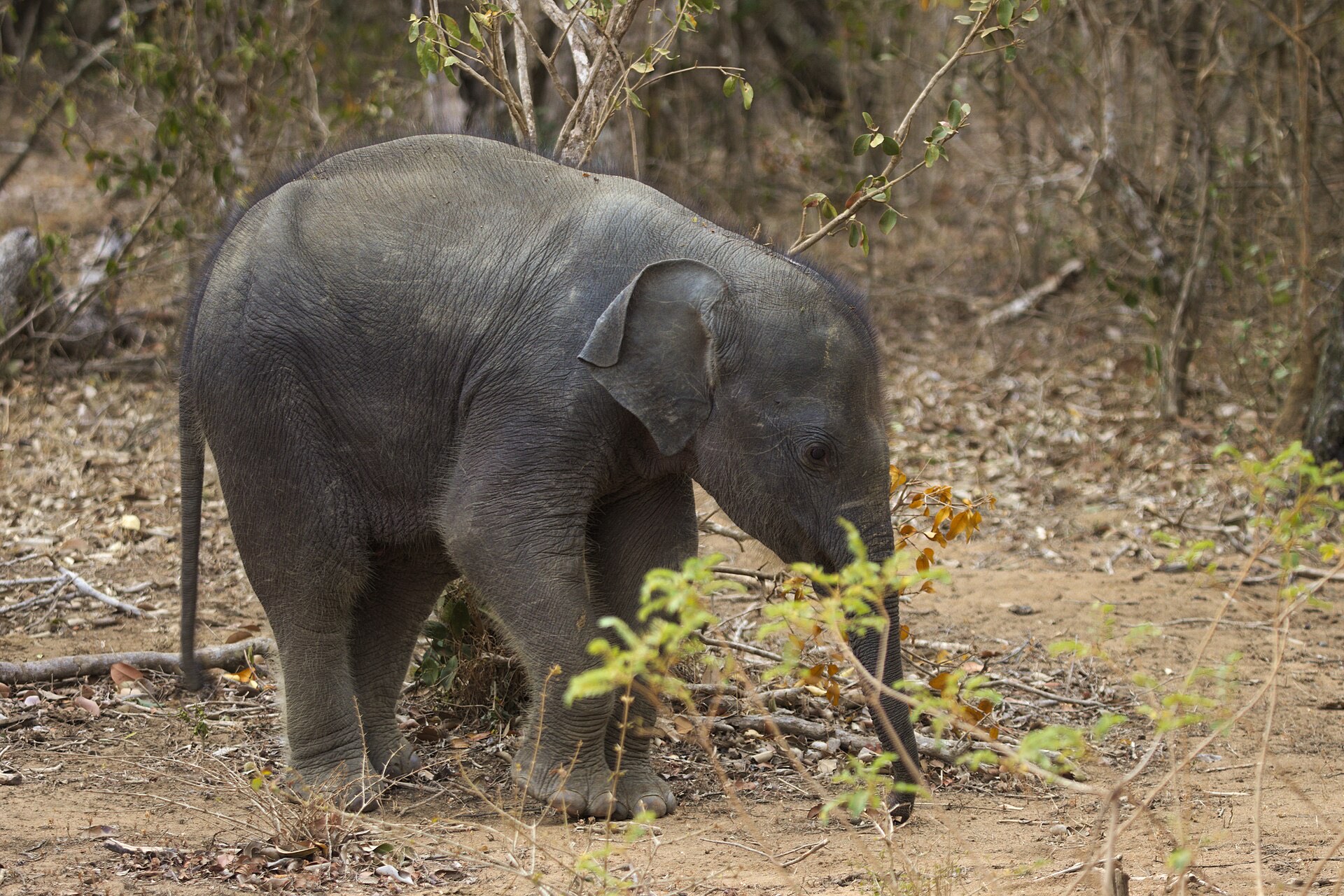
Sri Lankan elephant
Elephas maximus maximusThe largest of the Asian elephant subspecies. Family herds walk down to Yala's waterholes in the late afternoon to drink, bathe and spray mud.
Sri Lankan elephant calf Elephas maximus maximus C.J. Hatton · CC BY-SA 4.0
- Latin name
- Elephas maximus maximusSri Lankan subspecies
- Status
- EndangeredIUCN Red List (Asian elephant)
- Size
- Bulls over 5 tonnesup to about 3 m at the shoulder
- Diet
- Grasses, leaves, barkand fruit, eaten all day
- Where in Yala
- WaterholesBlock 1 & Block 5
Overview
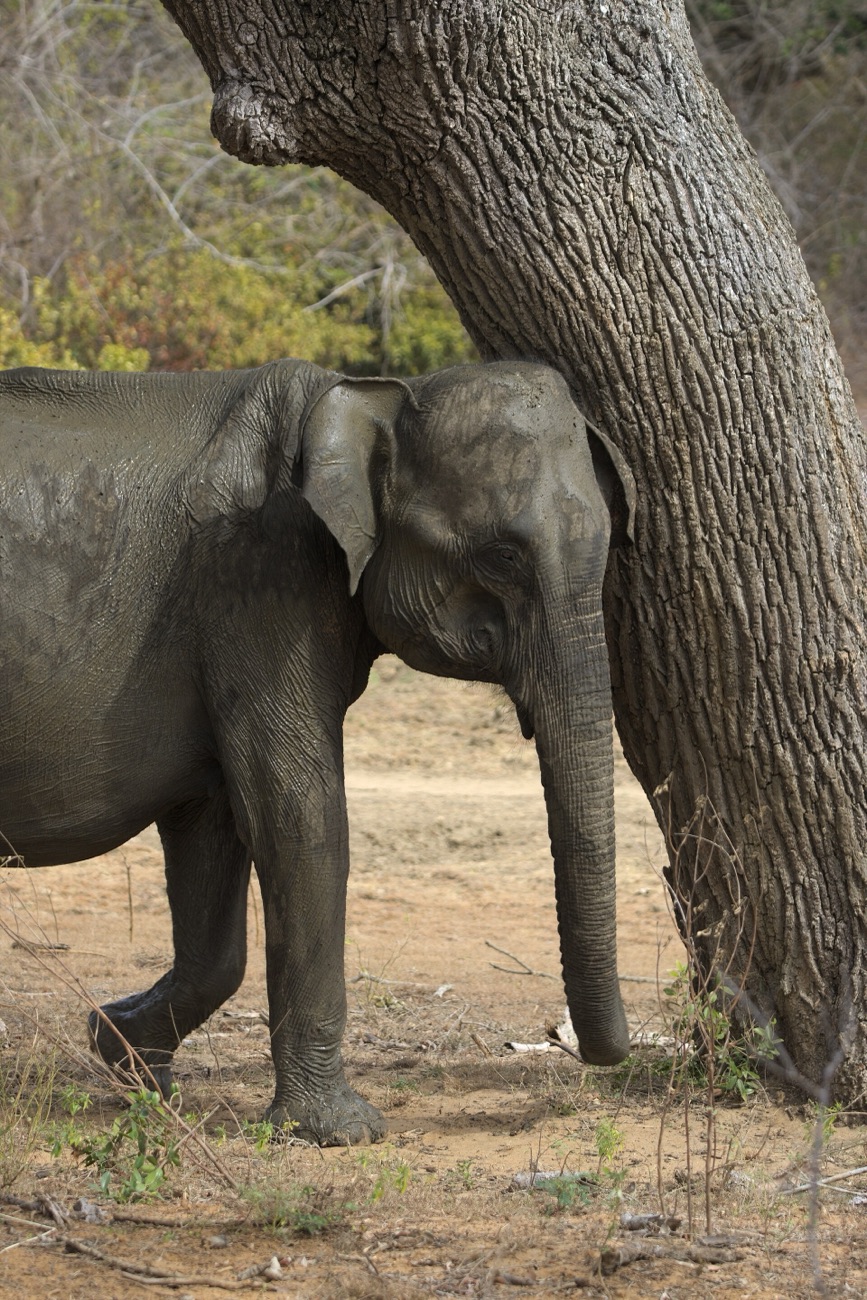
Herds of Sri Lankan elephants are one of the most reliable sightings in Yala, and one of the most memorable.
Sri Lankan elephants live in family herds led by an older female, the matriarch, who remembers where to find water and food through the seasons. Calves stay close to their mothers and aunts, and the whole herd closes ranks around them when something worries them.
Adult males leave the herd and roam alone or in loose bachelor groups. Only a small share of Sri Lankan bulls grow tusks. These 'tuskers' are rare and much admired, and most males have only small stubs called tushes.
How to spot one.
Head for water late in the day
In the dry months, herds come to the lagoons and tanks from mid-afternoon onward. Your tracker will choose a spot downwind.
Watch the dust
A rising cloud of red dust often means a herd is dust-bathing or moving through the scrub nearby.
Read the body language
Ears spread wide, head raised and a trunk held high mean an elephant is unsettled. That's our cue to give it more room.
Mind the musth bull
Bulls in musth have dark streaks on the sides of the face and can be unpredictable. We always keep well back.
At a glance.
- Active
- Day and night, with rests in the heat
- Social life
- Family herds led by a matriarch
- Calves
- One at a time, after about 22 months
- Tuskers
- Only a small share of bulls carry tusks
- Threats
- Habitat loss and conflict with farmers
- Spot it by
- Twin-domed head, small ears, often no tusks
The best months.
Elephants are in Yala all year. In the dry season, as water gets scarce, herds gather at the remaining waterholes and are easiest to watch.
Three things to remember.
Matriarchs remember
The oldest female leads her herd to water and food using knowledge built up over decades.
Few tuskers
Most Sri Lankan bulls have no tusks at all, which makes a big tusker a special sighting.
Gentle giants, mostly
They eat for most of the day and can drink well over a hundred litres of water at a time.
How we watch them.
- We never come between a mother and her calf.
- We keep the engine off and give herds an easy path to the water.
- We back off at the first sign of stress: ears out, head up or a mock charge.
- No feeding, ever. Fed elephants become dangerous ones.
More of Yala's wildlife.
The animals our guests ask about most, and how to find them.
Go looking for one. We know where.
Tell us your date and where you're staying. We'll confirm your jeep, your tracker and your pickup time, usually within a few hours.
- No deposit, pay after your safari
- Free cancellation up to 24 hours before
- Park tickets bought for you, no queue
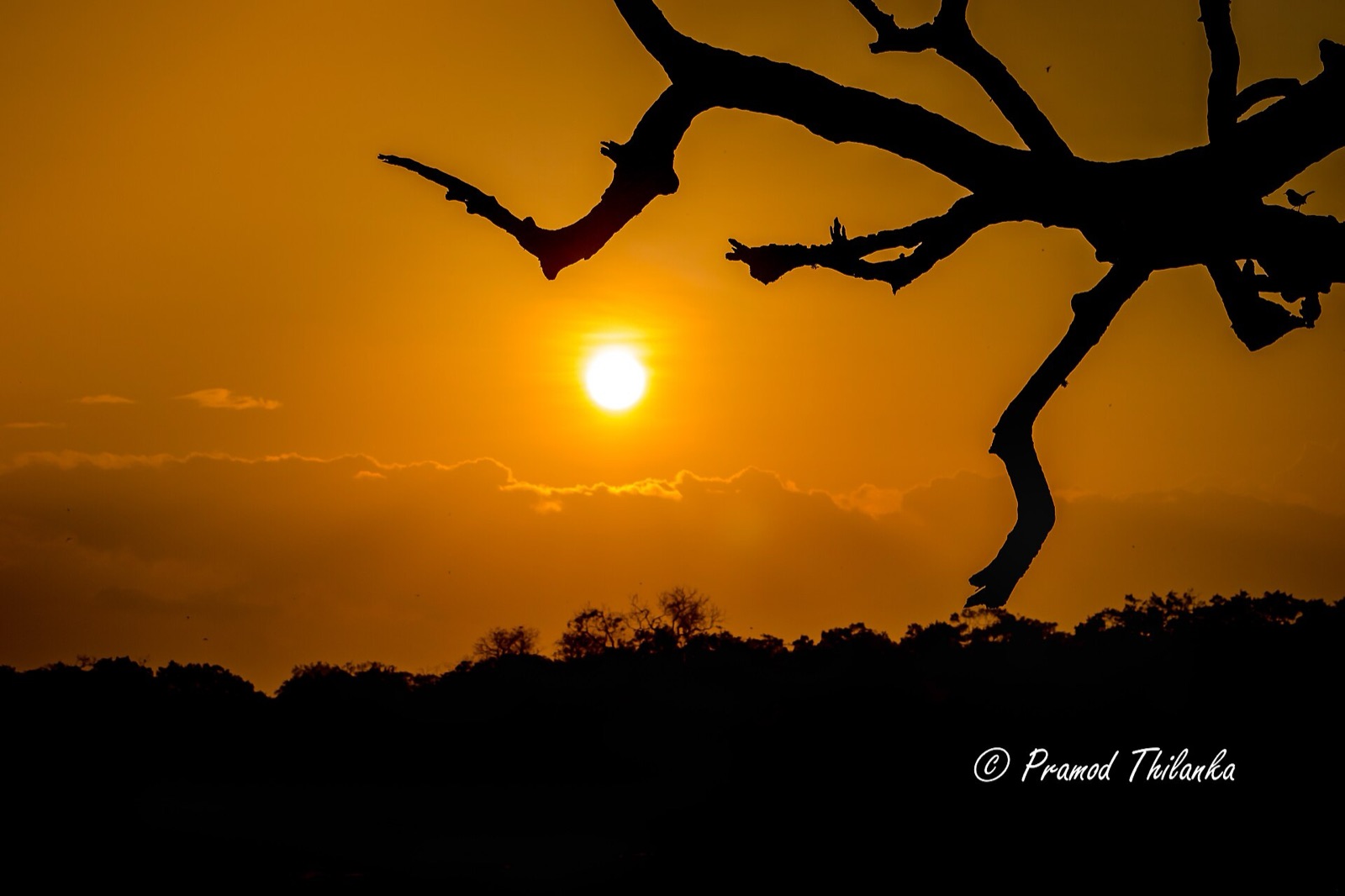
Sunset over Yala Pramod Thilanka · CC BY-SA 4.0
Book a safari
We'll reply on email or WhatsApp, usually within a few hours.